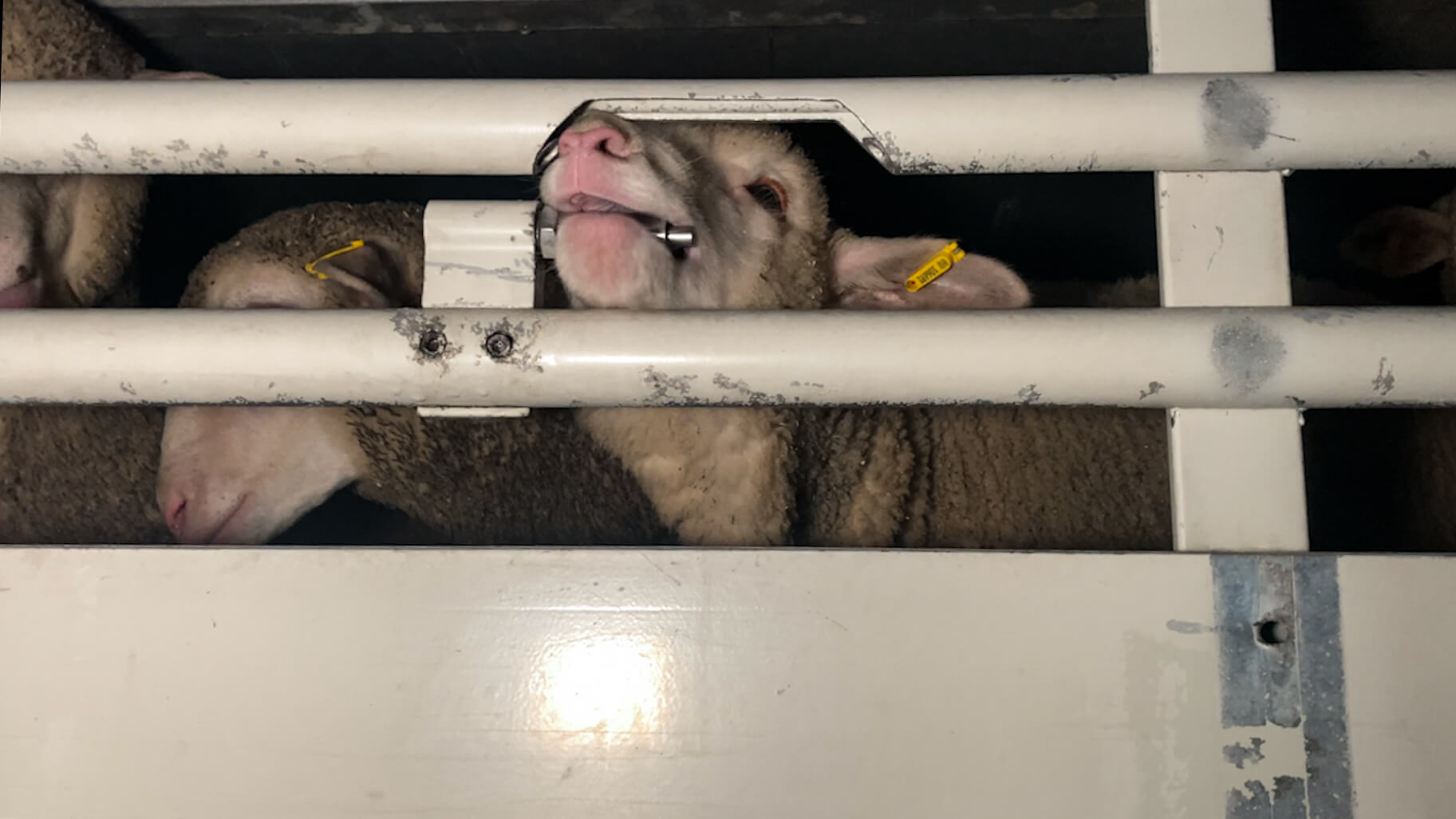
Our team, alongside other associations committed to the issue, carried out inspections on trucks coming from Eastern Europe which were transporting lambs directly to the butcher before the Christmas festivities – spending 6 days on the A4, 30km from the Slovenian border.
Once again inspections carried out on the Italian roads paint a dramatic picture of live animal transport in the EU, which involves 90 thousand lambs imported from the rest of Europe in December. In fact, right at Christmas one quarter of 2 million lambs slaughtered during the year in Italy are killed – especially in the Puglia and Lazio regions: about 552 thousand animals.
Watch the investigation
The images gathered during this period, together with Animals’ Angels, Animal Welfare Foundation and Enpa demonstrate several problems:
- Animals dead and crushed by companions;
- Unsuitable troughs: do not allow animals to quench their thirst for the entire duration of the trip;
- Trucks so made as to put the safety of the animals at risk;
- Inadequate height of levels: the animals touch the upper level so travelling in an unnatural position;
- Overcrowding and poor hygienic conditions of the bedding.
All the problems regarding the transport of lambs from Eastern Europe
Of the 8 trucks which the authorities were alerted of, all were stopped by the police and 1 surely fined for more than 10 thousand Euro.
Almost all the problems have already been documented in the past by numerous investigations: these are clearly systemic infringements on the regulation of long-distance animal transport which reveal all the shortcomings in the current legislation.
Among the problems we have documented: the inadequate height of the levels does not allow the animals to be in a natural position, the space is insufficient and not suitable for animals to move or lie down, inappropriate troughs prevent the lambs from drinking, the presence of dangerous gaps in which the animals risk getting caught, little bedding and overcrowding.
Unlike the past, with this occasion some of the investigators found sheep of different ages and sizes on the same truck, a situation contrary to the legislation prohibiting the transport of animals of different sizes as the little ones risk being crushed and injured by the older ones.
The most striking case was that of one truck stopped near Sommacampagna (VR) and thoroughly inspected by the traffic police with the aid of a veterinarian, on which animals were travelling in overcrowded conditions – at least one sheep died during the trip and one was suffering on the floor.
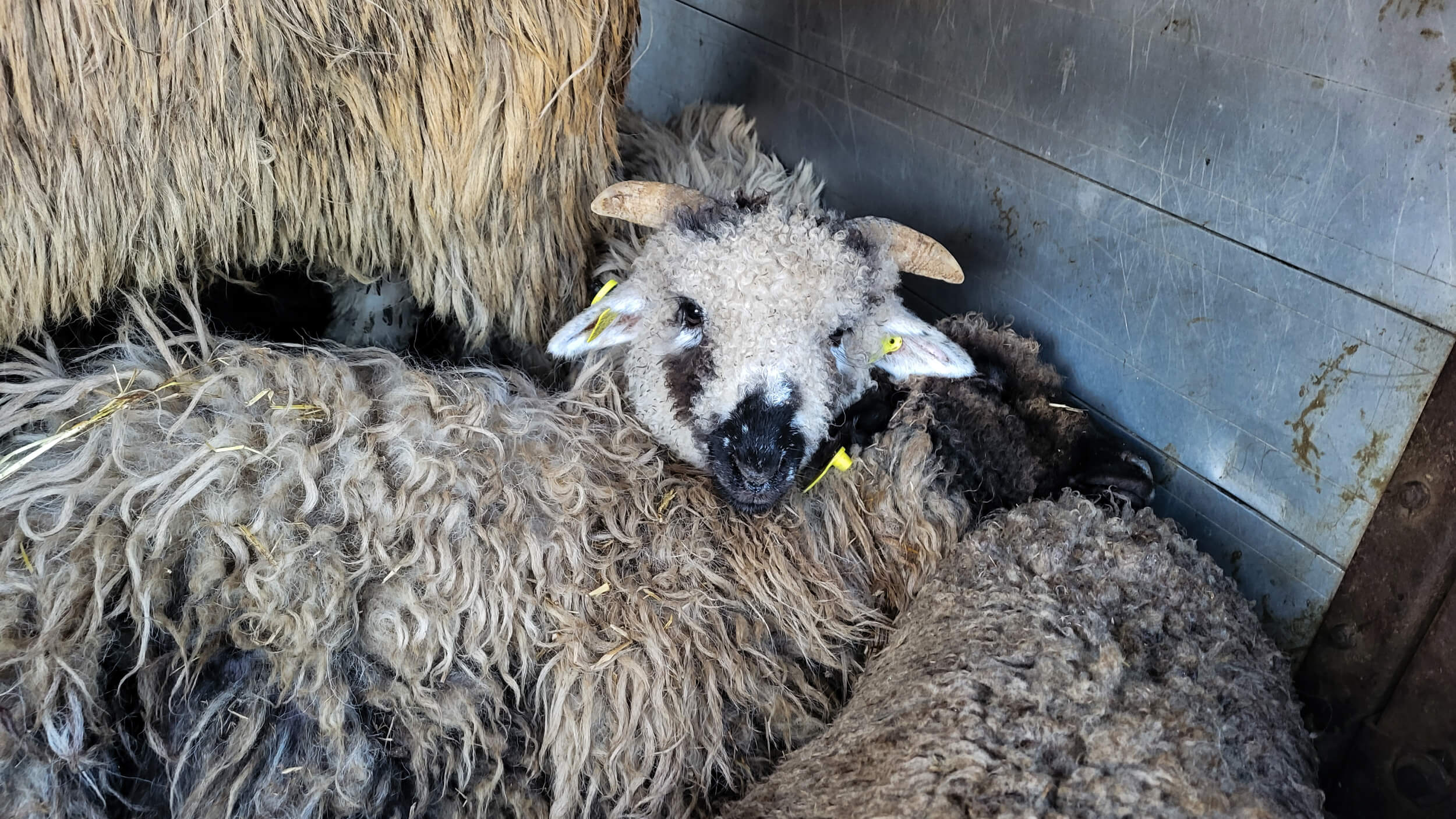
In another very severe case 169 animals were found to be in excess of the capacity of the truck, 5 sheep were dying on the ground trampled on by other animals, there were a few broken troughs and others were inaccessible. The carrier in question furthermore had prior infringements of the animal welfare legislation, nevertheless the intervening authorities did not act.
Our requests to the Ministry of Health and the European Commission
A few days before, by request of Essere Animali, a ministerial note by the Ministry of Health was issued, precisely in order to increase controls and to indicate to the appropriate authorities the priorities to be verified. While the note has been effective in ensuring more controls than in 2022 (at the time no police force went out to inspect arrivals from Eastern Europe), all this however is part of a lacking legislative framework at a European level, which does not truly guarantee the welfare of the animals during transport, and which is still blatantly violated by the operators.
In fact, a few days ago the European Commission proposed a revision of the legislation, but this proposal is still largely inadequate. Europe and member states can and must do more for the over 40 million animals, not only lambs, that are transported for long distances within the EU and to third countries yearly.
Some of the new points introduced by the Commission will positively affect the animals transported live – as in the case of some unweaned animals like calves – however, long- distance transport will continue. Just as exports to other countries lacking an animal protection legislation will continue as well as very long trips by ship. Many other problems still remain unsolved, such as the problem of inadequate troughs, the fact that the animals that are injured during the trip cannot be helped and fines which are still disharmonious and rarely given as well as controls too few and ineffective.
For this reason, it is necessary to continue to apply pressure until the positive proposals made by the Commission remain and others are introduced and reinforced, in line with the views of the EFSA.